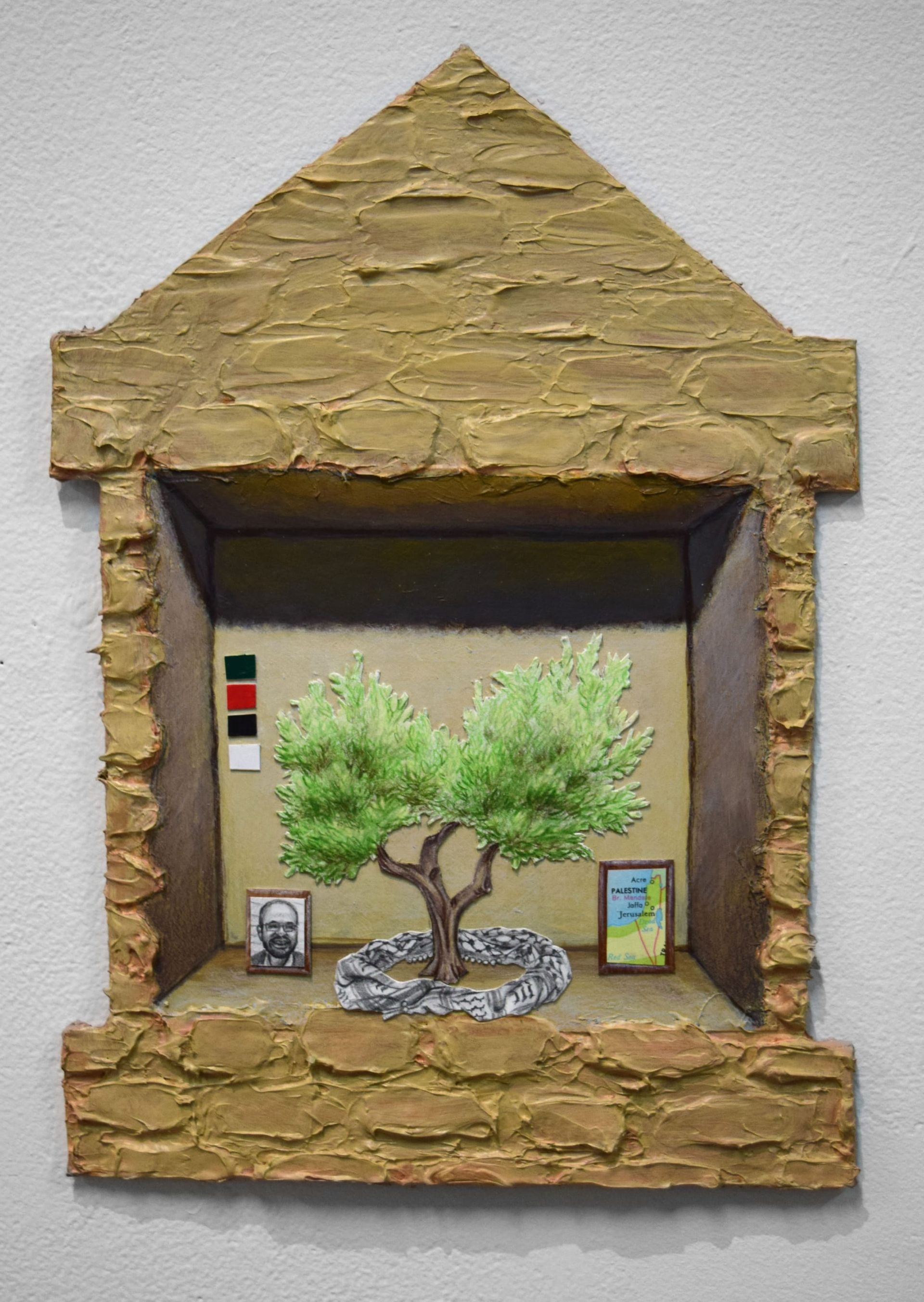
Antoinette Legnini is a visual artist, educator, and organizer from the Bronx. Somehow we started a conversation about wonder, wondering, making art, and holding on to sanity a few years ago and it's been going strong ever since. I was delighted to get a little piece of it on the "record."
This interview was conducted on July 29th and has been lightly edited for clarity.
A I was gonna ask you a question
K Oh yes, go ahead.
A I was gonna ask like what inspired you to start doing this?
K Well, I feel very like evangelical about enthusiasm. And I feel also like curious about other people's relationships to it. And I feel like it's very contagious. There's this teacher named Norma Wong, who talks about like the human quotient. And her most recent book is called Who We Are Becoming Matters. But she talks about how like, when we're connected to our spirits, and like what we want to be doing--or like when we're disconnected, that's how violence and vengeance happen. So I'm like what's the word on how people are connecting, like through art practice or whatever to that like greater intangible thing that makes life tolerable?
A Yeah
K So I just kind of wanted to like nerd out about it and talk to people who I respect and admire about their stuff.
A Oh, man, yeah. Like that's, that's also like the kind of shit I want to like live and die for. You know what I mean?
K Right
A I'm like, yeah, enthusiasm, like collective effervescence, all that good shit. I just read a version of that in the book that I'm reading right now, I feel like our antennas are connected, which I love. It's the book The Gift by Lewis Hyde. I don't remember if I told you about this yet. And it's actually about the gift giving economy. (K gasps) And it's incredible. It's so good. He just said when we feel disconnected from nature, we feel more destructive towards it. But if we feel like it is part of us, we feel inclined to protect it. Like, oh, yeah, like that, that makes sense to me. And that's really stuck with me. For the last few weeks, I keep coming back to that, like, yeah, of course. When you feel bonded and connected to something, it becomes part of you, you know? So yeah, why would I be destructive towards that?
K And it applies to even to our own selves, when we feel disconnected from ourselves, we're more self-destructive.
A Yeah, that's a great point.
K Okay, well, would you like to introduce yourself to the people? How would you like to be known?
A I've been introducing myself these last two years as Antoinette first. It's my grandmother's name. So I can bring her into the room. That's kind of nice. I go by Annie, artist, teacher, nerd, or dork. I like dork more than nerd. Dork is like, less stakes. You know what I mean? It's like, you don't expect a dork to know much, but you expect them to really geek out about something, you know, like be really enthusiastic. Come on now. Dorks are, if anything, they are enthusiastic. So dork, artist, educator, whatever. Curious human. In New York, from New York, from uptown, from the Bronx.
K As you know, the title of the newsletter is it's because it's on, which is, it's about enthusiasm. And I'm curious, what you're feeling enthusiastic about right now? Or like, what in your life makes you feel like it's on?
A Yeah. I'm getting my feet wet more into like, these like, lefty Italian spaces, I'm now a part of Italians Against Fascism now, which is very cool. It makes me very happy. And it's been wonderful to feel like I'm part of a political home that also feels like a home coming to my identity. Because a fellow person affiliated with this group, she mentioned she felt like she couldn't be a part of her own cultural group because she wasn't guido enough or like, racist enough. So she's like, yeah, I can't take part in this. Even though there's so much about my Italian culture that I love, like, the folk magic, and the symbolism and its history. And even though so much of Italian history and Italian-American history is like, working class history, like labor rights activism, a lot of it gets erased. And I feel like that's what I've been really enthusiastic about lately is taking charge of that narrative of like, taking the mic from like, some of my, the folks in the group call the right-wing Italians, Magaroni, which is great.
K That's so funny.
A It's true. And taking the mic from them because they're fucking loud. And doing a very small part, of course, in challenging white supremacy, from where I am, and white supremacist hegemony and defanging that, starting with my family first, and then folks I grew up with. We were talking about doing more political education, and maybe doing it in every borough. And I'm like, oh, God, I don't know what that would look like in like, Italian parts of the Bronx. Because a lot of it is the loudest part of right-wing. I don't know who else is there. Just like I was there. You know what I mean? I've been very, I felt very called to this. And I also don't know a lot, now I have to start reading like, very specific Italian radical political history. And I just learned about like, anti-fascist pasta day and the history of that, which is really fucking cool. Have to get back into Gramsci, to be able to share that and do political readings with friends. Michael Parenti, you know, operating from that point of view. So that's had my heart for the last couple of months. And also, Italian folk magic, too. And getting into that. I currently have a pack of Napoletan playing cards, being cleaned in my kitchen in salt. And I'm like, oh, man, I'm learning now, you know?
K They're being spiritually cleaned?
A Yeah, yeah. And like, maybe I don't know if that's disrespectful of me to do, but it's like, I don't know a lot. And I feel like a kid, because there's so much of this part of my heritage that I just don't know. So that's been very interesting to me. Like, get back into that and really deep dive. It's a long-winded answer.
K Thank you for the long-winded answer. So much in there. I mean, there are two directions we could go, and maybe I'll just let you choose your own adventure. One is, I mean, so many of the artists who I respect have such deep, sharp, political chops. That is what drew me so strongly to June Jordan's work, and why I love that quote so much. And I really hear that in what you're sharing, and also I see that in your life, the dance between visual art, sculpture, that imagination work and then the political and cultural reclamation and weaving. And so that's one road we could go down. But the other road is, the actual etymology of Enthusiasm is, I learned about it from this novel, Lost Children Archives by Valeria Luiselli. She talks about how the word is from Greek, in God Earthquake, in theo seismo. And like, Greek goddesses allowing themselves to be possessed fully by something greater than themselves. [*correction - greek priestesses]
A Holy shit
K Which is crazy. I feel like that's the kind of 'on' that people feel in surrendering to a creative force or a political force. So I'm curious how that lands for you. I feel like reclaiming the cultural orientation, or, like, the rituals and traditions is also, like, if we go back far enough, all of our people know how to be in relationship with the mystery and the earth. And it's like an infrastructure for how to do that, that we've been cut off from. So, and there's not really a question in either of those. But I guess, how do those two realms land for you?
A Greek God Earthquake, all the hairs just stood up in my body. I'm like, oh, my God, that is, that is, you know, wow.
K That shit wrecked me when I read it..
A that lights me up like nothing else. I'm like, wow, that is incredible. And you said the word surrender. I wrote a research paper in grad school that was literally on surrender. And manifestations of that seen throughout art. Because I just am going to always have more of an interdisciplinary approach and interest than some of these other, traditional art students. Like, no shade. It's just, I want to weave that stuff in. Where maybe I'm not talking as much about painters. That was my way to do it. Which is funny. It's like you're in art school. But, yeah, that kind of, like, rapture you're talking about.
K You want to start with the etymology, like, in God, earthquake, being possessed by something greater, and work your way backwards or forwards to the relationship between creativity and revolutionary struggle for you?
A I feel like in my work and in my practice, especially, like, we just made 10 years since we left undergrad, which is fucking wild. I think I told you I was a theology minor in undergrad, women's studies and visual arts double major, like, strange things all together. The through line with me, since then, I've been trying to weave all these things. My biggest interest now is how do I kind of integrate all these together in the work? So exploring Italian folk magic, where it's, like, part sacred, part profane you know. Because it's, like, no self-respecting Italian Catholic woman or whatever would be, like, oh, yeah, I practice witchcraft, it's, like, no, I'm praying to saints, you're not supposed to pray to anyone other than God. But then if you go to Naples, people have shrines to their family members outside. I really appreciate that in that history there's a little bit of both in there. And I feel like that's where the shrines I've been making, the question I ask myself when I'm making them is what do I want to care for and maintain in public with others? So it's trying to weave together this social justice aspect, this kind of quasi-religious kind of feel where it's, like, I am going to make a shrine for Narcan, you know, because this is a miracle drug and is life-saving and deserves worship, you know?
With the other kind of revolutionary spirit and art question, I think about that James Baldwin lecture called The Moral Responsibility of the Artist, and I kind of can't shake that as artists, as people who either create visual work, musical works, whatever it's kind of a backdoor to consciousness and to change minds and hearts and, it's a slow burn, you know? Of course, it's not an immediate revelation, but it can kind of inspire that. And I think about that a lot, that if I'm making something, I don't know, no shade to folks who just want to let out their own interiority, no one has to do anything, but I feel a responsibility to sharpen myself to be disciplined in my reading, my theory and practice, and to incorporate that, like, in some kind of, like, image making or sculpture. And maybe that's, like, way too much pressure on myself. Like, I've never felt like, like, I just went to a talk with one of my friends from grad school (Zachery Lank) who, he's like, "I just make shit first and I don't think about it." I'm like you don't fucking read something and then you're, like, I got to also look up this thing and this thing and then weave it all together. That's how I've made shit for, like, a long time. And he likened it to, I really like this image, you're at the bottom of the sea and you're trying to bring up this, like, insane sea creature. And, like, you don't know what it is. And if you bring it up too fast, it's going to burst. And I'm, like, holy fuck.
K whoa...
A And he's, like, that's your idea that you're killing if you overthink it. That's it, you know? Yeah, like, that fucked me up. Because I constantly am overthinking it. Like, I'm letting my head do the work without letting my hands do the work first. It's, like, let your hands work and then find the meaning after. Or see what happens after. And I have to tell myself, like, all the shit you read and feel, that's still in you when you're making, you know what I mean? So it'll come out in the fucking work. Just do it, you know? [ K laughs ] But I refuse. I'm trying to do that more.
I want to share, two artists that came to mind when you brought up that question, who are, so unflinching in their political discipline within their work that I just really respect and admire. One is Celeste Dupuy-Spencer, who just recently passed and, like, broke my heart. But her work is so unflinching especially in regards to Gaza, like, for years and is visceral and just incredibly well read. And, like, you know, I'm looking at someone like this, I'm like, yeah, that's the goal. I only spoke to them briefly, but, like, their heart is through their hand and eye and mind, you know, because I'm like, yeah, it's all here. You know, like, you are a student of the world and, like, it shows through your work, you know, which I really admire. And the other, Shellyne Rodriguez, who's just incredibly, like, principled and brings her values to literally every part of her life and art career, which is, like, most of the time not great because, like, the art market and, like, the art world is tied up in a lot of bullshit. So to have a career out here, it's kind of like you have to make a lot of concessions, like, when you get to a certain level and she won't, which I really appreciate. I don't know if this is useful.
K Well, it's very useful. And part of the whole occasion is I just wanted to hear people wax, you know. I'm finding a lot of meaning in what you're saying. So thank you. I really, I'm a big fan of your, or at least the ones that you've showed me, your shrines. And what I'm thinking about is June Jordan was also very interested in= public infrastructure and landscape architecture. And in the introduction to Civil Wars that the quote is from, she talks about, like, what kind of parks and schools and homes and whatever would make love an easy response. And I feel like that's, or I just, like, hear that kind of wrestling in your question about what do we want to care together about in public? And it's like, yeah, I want to remember my family members. And I want to remember, like, I want to direct attention to harm reduction or, like, all of these things that, like, aren't thought of as divine, in a traditional religious way, but are so sacred, you know?
A Yeah, absolutely. Once you put that lens on where it's, like, oh, no, literally everything has kind of got a holiness to it, you know? And especially that idea of, like, when you see someone as, or something, this other as part of you, like, that is a kind of holiness as well. It's like seeing a kind of God in someone else or something else, or, like, the land itself. I didn't know that June Jordan was interested in that, because I'm really interested in public space now, and I love that, like, how can we kind of, what was that quote, like, generate or, like, stimulate love? What was it?
K Yeah, let me not butcher: "What kind of schools and what kind of streets and what kind of parks and what kind of privacy and what kind of beauty and what kind of music and what kind of options would make love a reasonable, easy response?" (Civil Wars, xi)
How does the built environment need to be designed so that it's, like, so that that place in ourselves is more accessible or something?
A Yeah, that makes me think right away of, like, metal detectors going into school, you know what I mean? Or hostile architecture to prevent a homeless person from laying down. It's like, bro, they're already outside. Like, what is wrong with you? Like, and it's for, like, beautification, which is so gross, you know? It's so anti, not even anti-social, it's more depraved than that. It's just anti-human. I don't know. Inhumane.
K Anti-human seems more direct than inhumane.
A Yeah this is Life opposing, you know
K Yes and for what?
A Yeah, It's such a gross disgraceful response. My high school had metal detectors going in and I understand we want to keep folks safe but doesn't that start within what June Jordan is saying? Providing the right services, having free lunch for people, making sure people have a way to and from school, make sure people are housed like how are you doing? Like do you have somewhere to go after school, you know what I mean? Can you afford the books, you know. It makes me think also of the social determinants of health like how is that affecting your mind body and spirit? It just feels hostile in a very unnecessary way when life does not have to be this way. And I understand we want safety over everything, but I'm like, I don't believe you actually want to keep people safe
K Yeah...
A I don't think anyone who's Integrating these kinds of points of infrastructure, I don't think this is about safety or public good at all, this is about othering people and then like you were saying that leads you to be more destructive and violent towards not only people like I see this shit for like, you know the spikes on the tops of buildings like for the birds, too It's like they're fucking birds just let them live
K that is a very scary parallel
A Yeah, and it's ugly
K Yeah
A It's inhumane, this is how you're treating anyone you wanna other. I wonder about this a lot because now I'm drawing a lot cuz I'm like alright, I need to see if I can still make a fucking composition without all the razzle-dazzle of like mixed-media it's like whatcha got? you know, so it's like it's been a good practice for myself, making like very weird drawings, which is like kind of cool to see like what's what's in me
K in the depths, in the bottom of the ocean
A have that Scary ass monster pop-up. But I had this idea for a drawing and I'm like this might not work, but it's an interesting idea of like dreaming about a different world. I was at Union Square and I saw the police station there, you know, it's huge and I was like thinking what if I turned that space in the drawing into like some kind of a public mental health crisis center, where like we had these kinds of folks like in the trains like and not a million police officers. I've wondered about how many things would be de-escalated. Even that is in a way another band-aid issue on top of like, people need fucking housing and food, you know what I mean? So it's like even that future that I'm dreaming about, that's not even the end goal. That's not the final stop, but just thinking about like what what the space can be. Ruth Wilson Gilmore talks about, I'm thinking about a lecture that she did where she said Marx said that the materials, the tools that we're working are apolitical, like a brick is apolitical, but then a brick structure can become a prison, and that becomes a politicized space. The building itself the materials themselves are apolitical. So what can we what can we put there instead of a prison? I'm just like Fuck, you know. Yeah, we can create new worlds I wonder about this a lot, but I kind of get stressed out by it too because I have the fix-it brain a lot where it's like some things like don't need to be fixed like right away with the answer.
K I'm familiar with that Condition, I have that one.
A So Yeah, the dream brain is great and I feel like June Jordan's question like beckons the dream brain, and I want to be in that more
K hmmm
A So I appreciate you bringing that to this conversation
K the dream brain, the bottom of the ocean
A the spaces I want to be in
If someone shared this with you - you can subscribe here. If you valued this slice of language one way to support is by passing it to someone else! You can also: